When a Nor’easter or ice storm rolls through Hunterdon County, the biggest stressors usually show up fast: road conditions, power reliability, and the simple question of whether your home will stay warm through the night. If you heat with pellets, you already have a strong advantage—high-efficiency fuel, consistent heat output, and straightforward storage. The key is preparing your system and your supply before the forecast becomes a warning.
Start with supply planning, not panic-buying
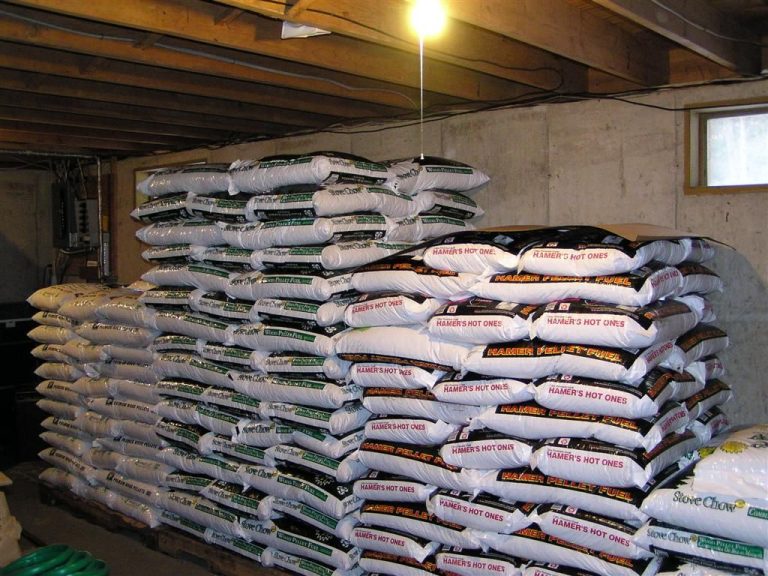
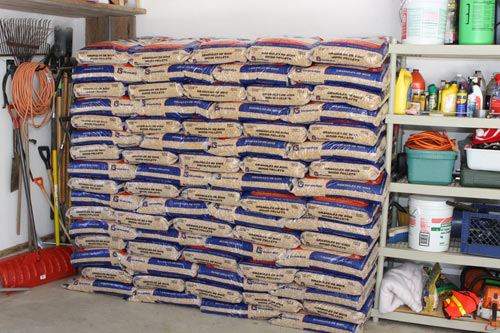
Pellet heat is most dependable when you’re not running your inventory down to the last few bags. Winter storms can delay deliveries, limit warehouse access, and create short-term shortages regionally. A practical rule is to maintain a “storm buffer” that gets you through 7–14 days of typical winter burn. That number depends on your stove, your home’s insulation, and whether you’re heating a whole house or a single zone.
If you use pellets as your primary heat source, consider building your winter plan around three checkpoints: early season stocking, midwinter replenishment, and a late-winter reserve. If you’re using pellets as supplemental heat, you still want enough fuel to cover a multi-day outage or a furnace service disruption.
Protect your pellets from moisture and temperature swings
Pellets are compressed wood. They perform best when they stay dry and intact. Winter storms bring moisture (rain, sleet, wet snow) and also temperature cycling that can create condensation in garages, sheds, or basements.
Best practices that matter in real-world storm conditions:
- Store bags on pallets or a raised platform—never directly on concrete. Concrete wicks moisture.
- Keep a small working supply indoors (or in a temperature-stable area) so you’re not cutting bags open in freezing damp air.
- Maintain airflow around stacked pallets. Tight stacks against a wall are more likely to trap moisture.
- If you’re storing in a garage, avoid placing pellets near snow-covered vehicles that drip meltwater.
Prepare your stove like you prepare your driveway
Storm reliability is about reducing failure points. Pellet stoves and inserts are dependable, but they do require routine maintenance to keep airflow, ignition, and exhaust functioning properly—especially when you’re running the unit hard for long stretches.
Before a major cold snap or storm window:
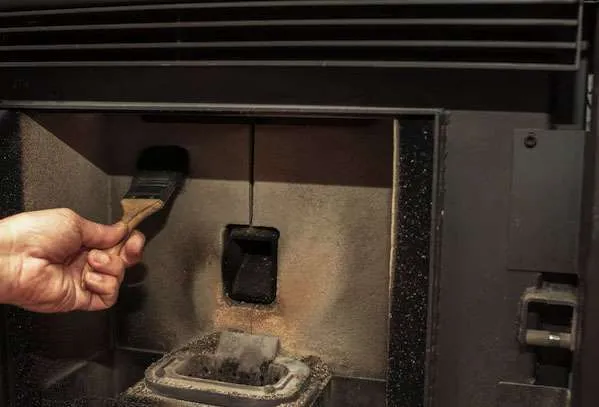
- Empty the ash pan and clean the burn pot thoroughly.
- Inspect door gaskets and glass seals; air leaks can reduce performance and increase soot.
- Vacuum accessible ash traps (as your manual allows) and ensure the convection pathways are clear.
- Confirm your venting is unobstructed—snow drift and ice buildup can cause problems at exterior terminations.
If you’re not comfortable doing deeper cleaning, schedule service early in the season. The week before a big storm is when everyone calls, and availability tightens quickly.
Have a plan for power interruptions
Most pellet stoves require electricity for the auger, fans, and ignition system. In a winter storm, that’s the one variable that can disrupt an otherwise steady heat source.
Consider these options:
- A battery backup (UPS) sized appropriately for your stove’s draw, used primarily for short outages or controlled shutdowns.
- A generator solution for longer outages. If you go this route, plan it carefully—safe ventilation, proper cords, and professional guidance when needed.
- A “warm room” plan: identify one area to heat aggressively and keep doors closed so you can maintain comfort if you’re conserving fuel or power.
Operate safely when weather is at its worst
During storms, households often run heat systems continuously. That’s when small issues can become big ones. Keep your stove’s area clear, store pellets away from direct heat sources, and ensure smoke/CO detectors are functional with fresh batteries. If you notice unusual smoke, smell, or performance drops, address it immediately rather than “pushing through” until after the storm.
Storm-day habits that improve efficiency
When wind howls and temperatures fall, the best way to stretch fuel is to reduce demand:
- Close blinds at night to cut radiant heat loss.
- Seal obvious drafts at doors and older windows.
- Use ceiling fans on low to circulate warm air downward.
- Keep interior doors positioned strategically to encourage airflow to the areas you want warm.
The goal: fewer surprises, steadier comfort
Winter storms are stressful enough without worrying about heat. A simple combination—dry storage, a realistic reserve, and basic stove readiness—goes a long way toward keeping pellet heat dependable through the harshest weeks of the season.